Introduction
Introduction to the Endoscopic Facelift
If you’re looking for surgical midface rejuvenation without the downtime that comes along with a traditional facelift, you may be interested in an endoscopic facelift. This cutting-edge procedure helps Houston patients restore tighter and more youthful-looking skin—call (832) 930-7660 for an informative endoscopic facelift consultation with Dr. Anmol Chattha.

What Is an Endoscopic Facelift?
An endoscopic facelift is a less-invasive variation of the facelift procedure. Traditional facelift incisions are created at the hairline near the temples and curve down around the ear. The incisions created for an endoscopic facelift are much smaller.
Because these incisions are smaller, patients recover more quickly and experience less bruising and swelling. Additionally, post-surgical scarring is incredibly well-hidden and inconspicuous.
The procedure is performed using an endoscope, a small tube with a fiber-optic camera and light. It is connected to an external video monitor. The endoscope transmits highly detailed images to the monitor. When the endoscope is inserted into an incision, the monitor displays detailed views of the underlying facial tissues, allowing for optimal surgical precision.
Ideal Candidates for an Endoscopic Facelift
Endoscopic facelifts are best for mild to moderate skin laxity, and because of this, ideal candidates are patients in their 30s, 40s, or 50s. Unlike traditional facelifts, endoscopic facelifts focus specifically on aging issues in the midface. These issues may include sagging cheeks and midface age lines.
Patients with severe laxity or signs of aging on the lower face and neck may prefer a traditional facelift. Traditional facelifts address these issues and provide more extensive rejuvenation.
Endoscopic facelift patients must be non-smokers or willing to quit before the date of the procedure. Smoking can negatively affect blood circulation and the health of the skin, resulting in complications during and after surgery.
Your Consultation
Before scheduling your endoscopic facelift, you’ll need to book a consultation with Dr. Chattha. As part of this consultation:
- You’ll discuss your aesthetic needs and goals for your endoscopic facelift to ensure Dr. Chattha fully understands your expectations.
- Dr. Chattha will talk with you about the procedure, what it can achieve, and whether it is right for you. Dr. Chattha will discuss every step of the procedure, including preparation and recovery directions. Please feel free to ask questions.
- Dr. Chattha will carefully examine your face and evaluate factors like skin laxity and thickness. We may take photos for reference.
- Dr. Chattha will ask you questions about your medical history, including allergies, underlying health conditions, and current medications.
- We will set a date for your consultation.

The Procedure
Typically, endoscopic facelifts take anywhere from an hour and a half to three hours to complete. Either general anesthesia or a combination of sedation and local anesthesia will be administered.
Once the anesthesia takes effect, Dr. Chattha will make tiny incisions. He will then insert the endoscope and use surgical tools to tighten and lift the underlying tissues of the face. Once all changes have been made, the incisions will be closed using sutures.
Combining an Endoscopic Facelift with Other Procedures
Dr. Chattha can easily combine endoscopic facelifts with other facial procedures and treatments, allowing him to achieve more comprehensive facial rejuvenation.
Neck Lift
A neck lift pairs very well with an endoscopic facelift. This procedure tightens sagging neck skin, reduces harsh neck bands, and removes stubborn neck fat. As a result, the neck looks rejuvenated and contoured.
Brow Lift
A brow lift raises drooping eyebrows and smooths away horizontal forehead wrinkles, vertical brow lines, and crow’s feet. Also called a forehead lift, this procedure lifts and tightens the forehead’s underlying tissues.
Your guide to post-Endoscopic Facelift care
Recovery After an Endoscopic Facelift
Recovery after an endoscopic facelift is shorter and more comfortable than a traditional facelift, because the procedure is less invasive. It also involves less bruising and swelling in the treatment area.
During your endoscopic facelift healing process, you’ll need to follow Dr. Chattha’s post-surgical care directions diligently. This will reduce the likelihood of complications, preserve your results, and help you avoid a prolonged recovery.
Once you return home from the procedure, you’ll need to rest so your body can focus on recovery. It’s vital to keep your head elevated during healing, even overnight, to minimize post-surgical bruising and swelling. Applying cold compresses as directed will also help with this process.
You can return to most activities in about ten to fourteen days. It will be important to avoid physically taxing activities like sports, heavy lifting, and other forms of heavy exercise for at least four weeks. This will prevent trauma to the incisions as they heal.
You’ll need to come in for follow-up appointments with Dr. Chattha. During these appointments, he will remove sutures and other medical aids. He will check the status of your incisions, address any complications, and clear you to resume certain activities when it’s safe to do so.

How Much Does an Endoscopic Facelift Cost in Houston, TX?
Several factors can affect the overall cost of an endoscopic facelift in Houston. The amount of time it takes to perform the procedure can affect the price, as can anesthesia fees and the patient’s aesthetic goals.
Several financing options are available for endoscopic facelifts and our many other procedures and treatments. We have partnered with CareCredit, PatientFi, Alphaeon Credit, and Cherry to help patients from all walks of life pay for the cost of these procedures and treatments. Patients can find out more during a consultation at our Houston facility.
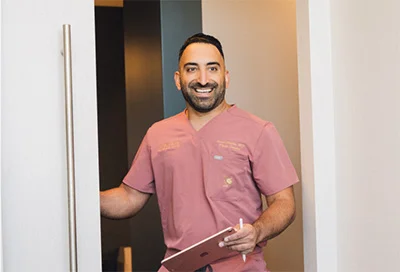
Why Choose Dr. Chattha for Your Endoscopic Facelift in Houston?
Dr. Anmol Chattha is a highly skilled plastic surgeon with years of experience helping Houston patients achieve expert-level facial rejuvenation. Dr. Chattha’s incredible facelift results speak for themselves.
He began his medical journey by earning an MD from Albany Medical College. He then traveled to Boston for a general surgery internship at Harvard Medical School’s Beth Israel Deaconess Medical Center. Dr. Chattha followed this by completing an integrated plastic surgery residency at the University of Chicago Hospitals.
Dr. Chattha has given numerous presentations and lectures at medical conferences. He has also written several peer-reviewed medical journal articles.
Endoscopic Facelift FAQ’S
Arrange a Consultation
Speak with Dr. Chattha during a personalized endoscopic facelift consultation at our Houston office to learn more about this state-of-the-art facial-rejuvenation technique. To set up your appointment, call (832) 930-7660.